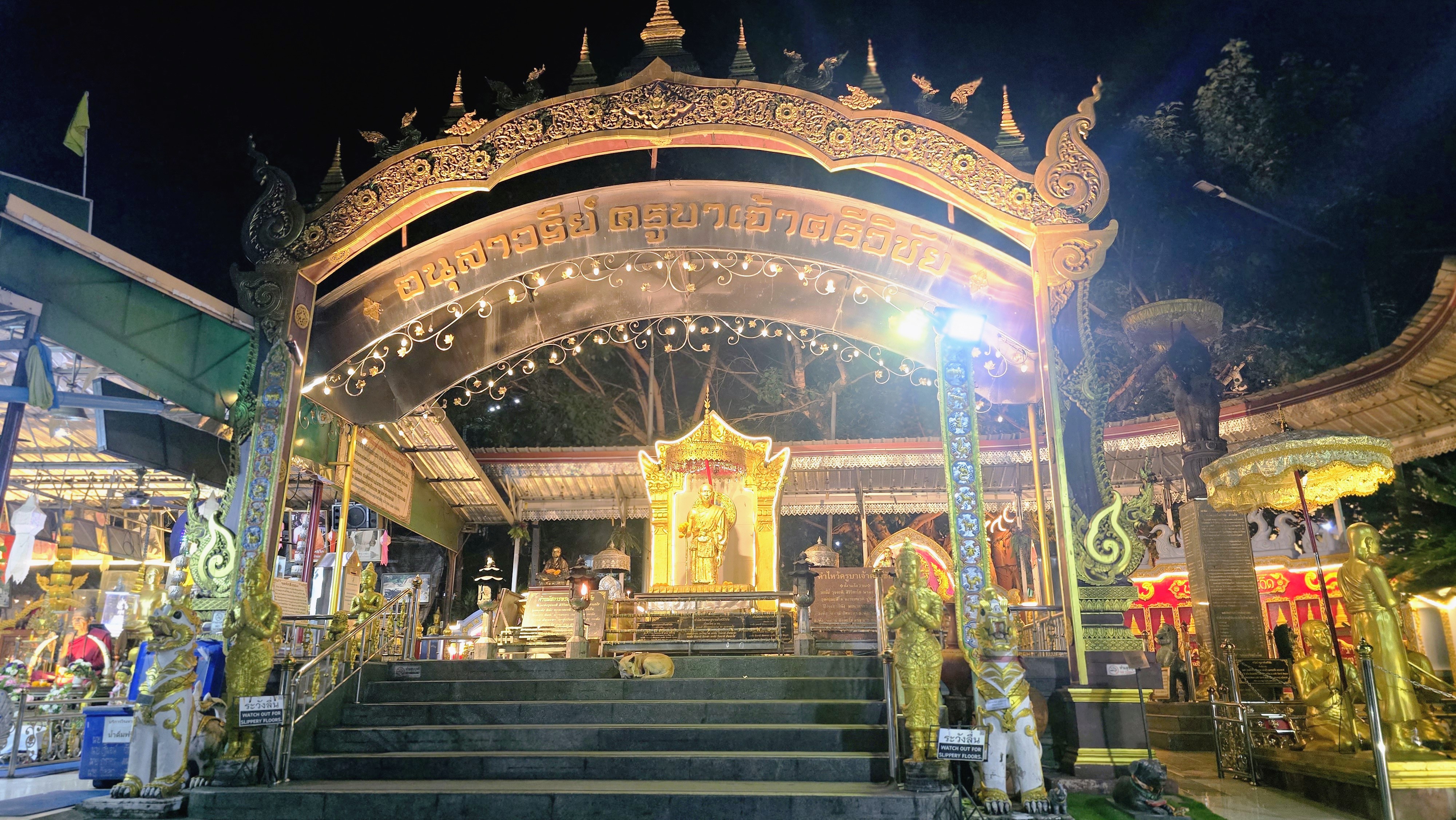
A Landmark of Northern Thai Devotion
Kruba Srivichai Monument (Chiang Mai · Thailand)
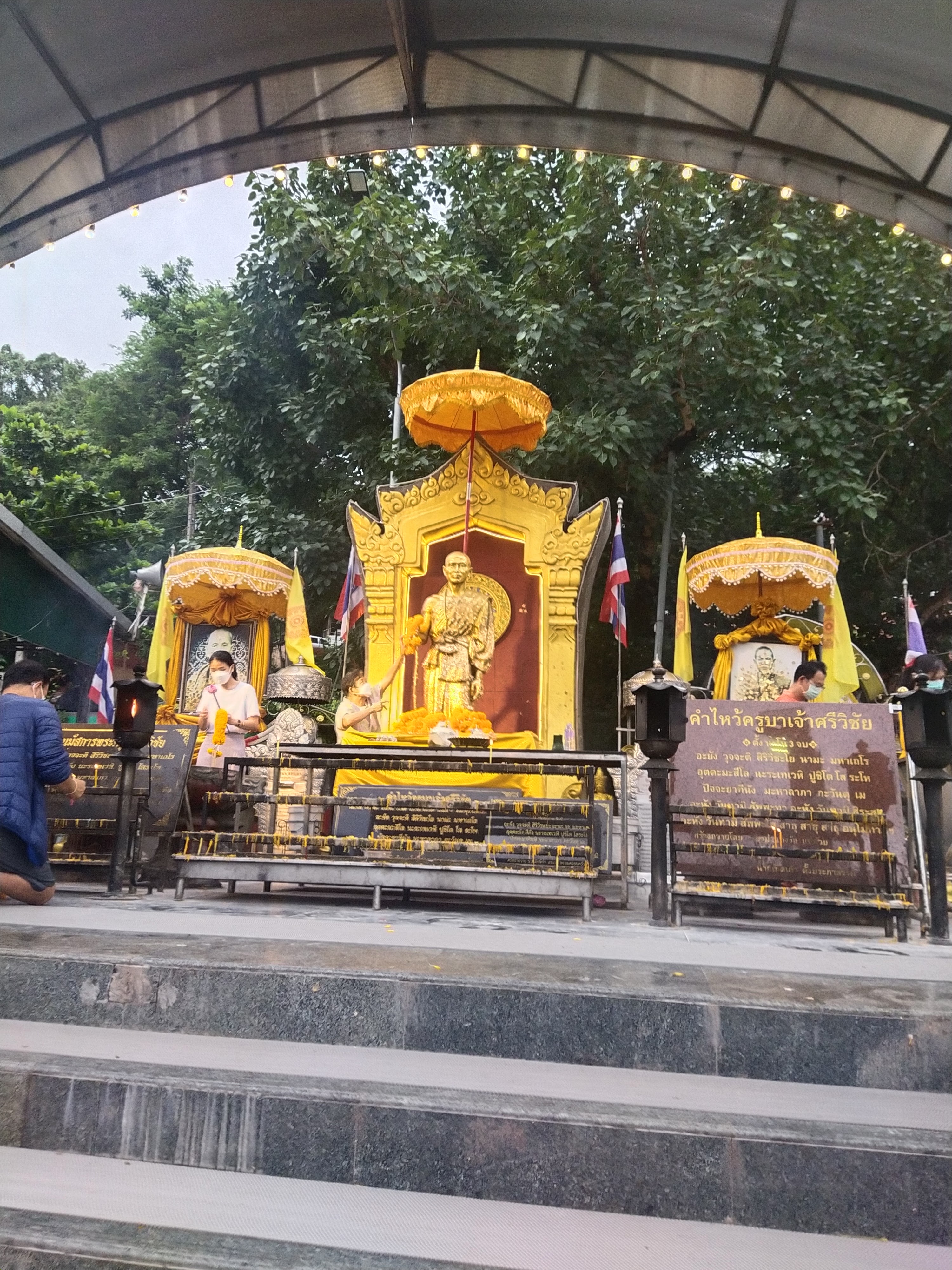
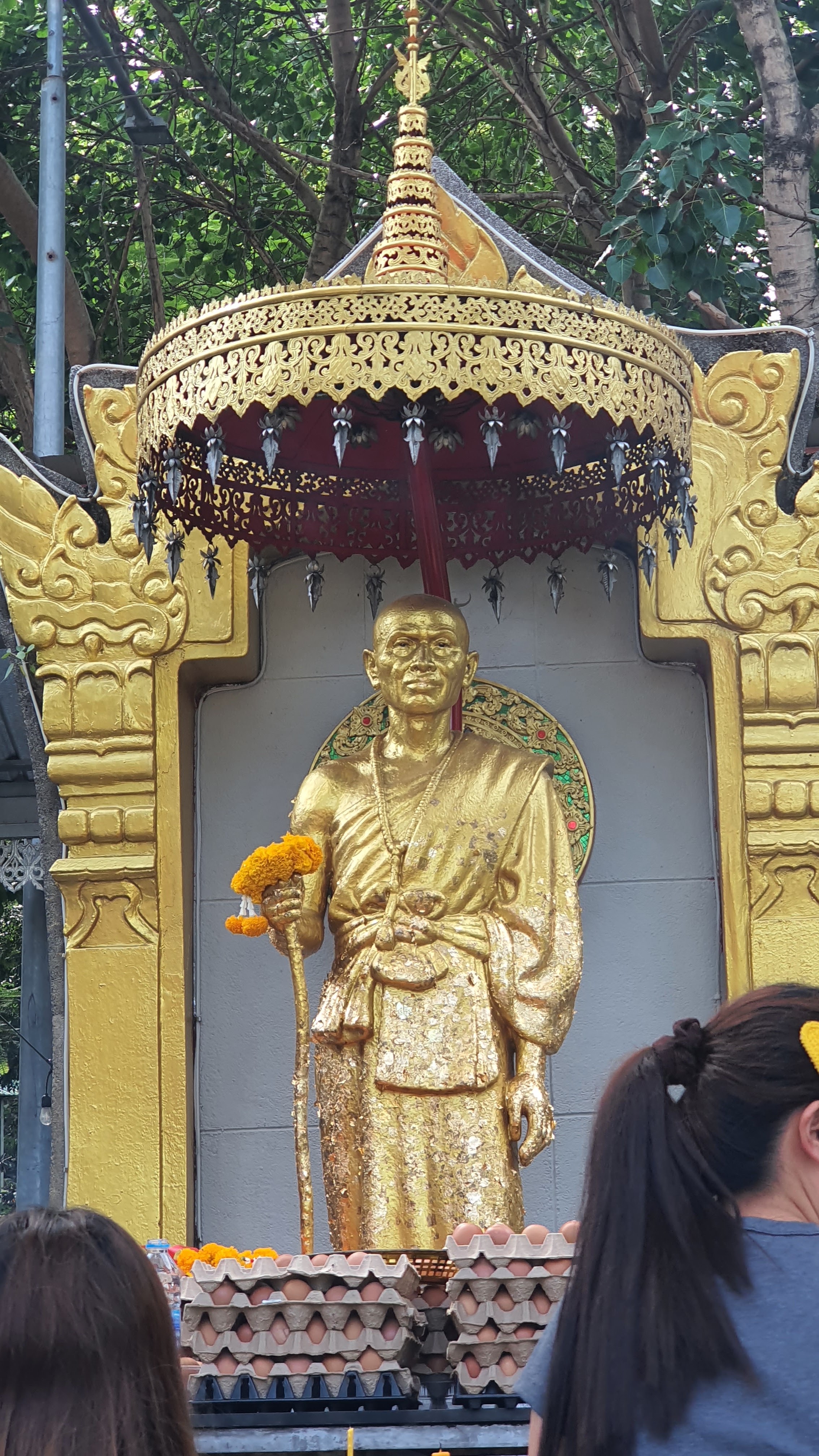
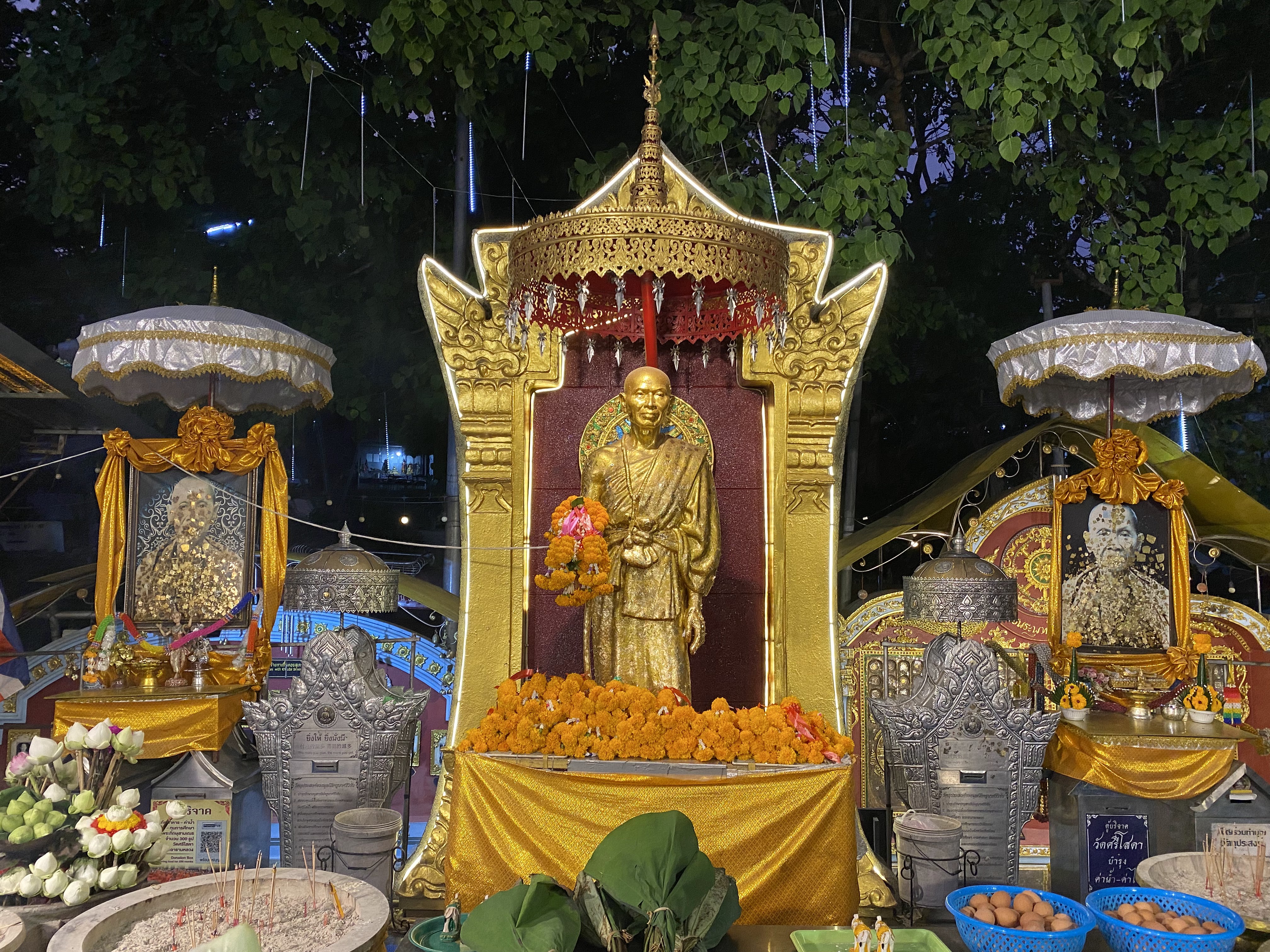
At the foot of Doi Suthep stands a serene standing statue honoring Kruba Srivichai (1878–1939), the beloved Lanna monk known as the 'Engineer Monk' who led the building of roads and temples across Northern Thailand.
Rating & review count synced from Google Maps user reviews · September 2026 · See all reviews on Google Maps ↗
Sacred Site
Kruba Srivichai Monument
Chiang Mai, Thailand
☀️ Clear · Golden-light 85%
Live Weather
Based on current conditions
Times are calculated from the monument's actual coordinates.
About
About Khruba Siwichai Monument (Chiang Mai)
Who Was Kruba Srivichai?
Welcome to Kruba Srivichai Monument (also written Khruba Siwichai or Kruba Sriwichai; Thai: อนุสาวรีย์ครูบาศรีวิชัย), the central monument honouring the Northern Thai monk Kruba Srivichai. Located in the heart of Chiang Mai, Chiang Mai Province, Thailand, this destination serves as a primary hub for travelers visiting the region.
At the foot of Doi Suthep stands a quiet monument to one of Northern Thailand's most beloved spiritual figures.
Kruba Srivichai (1878–1939) was a monk of the Lanna tradition, remembered across the North as 'Kruba' — a venerated teacher. Born in Ban Bang village, Li District, Lamphun Province, he devoted his life to meditation, austerity and public works, gathering a vast following.
He is best known for organizing thousands of volunteers to build roads, bridges and temples where few existed. His most famous work, the road up Doi Suthep, still carries pilgrims and travelers to this day — which is why this monument stands at its base.
When visiting Khruba Siwichai Monument, visitors can easily explore surrounding historical landmarks and points of interest, including Wat Phra That Doi Suthep and Huay Kaew Waterfall.
“He built the roads so that others could reach the mountain.”
Kruba Srivichai Katha & Worship Guide
The chants Thai devotees recite here, what to bring as an offering and how to pay respect — ready to read on your phone at the monument.
History
History & Significance of Khruba Siwichai Monument
History & Legends
The story of Kruba Srivichai is woven into the modern history of Northern Thailand — a monk whose faith moved both people and, as legend has it, the earth itself.
Early life & ordination
Born in 1878 in Ban Bang village, Li District, Lamphun Province, he was ordained as a novice and later became a monk devoted to meditation, austerity and public works. He gathered a large following across Lanna.
The 'Engineer Monk'
At a time when Northern Thailand had few roads, Kruba Srivichai organized thousands of lay volunteers to build roads, bridges and temples. He is credited with restoring and founding more than a hundred religious sites.
The Doi Suthep Road Miracle
His most famous project was the road up Doi Suthep to Wat Phra That Doi Suthep. Work began on 9 November 1934; with no modern machinery or government funding, over 11,000 volunteers carved an 11.5 km mountain road by hand in just 5 months and 22 days (opened 30 April 1935), ending the era of pilgrimage on foot—hailed as the 'Doi Suthep Road Miracle'.
Passing & the monument
Kruba Srivichai fell ill and passed away in 1939. Decades later, this monument was raised at the mountain's foot so that travelers would remember the monk who connected the city to its sacred hill.
The legend of the moving earth
Local lore says that when volunteers struggled to haul giant stones up the mountain, Kruba Srivichai's blessings seemed to lighten the load — and that rocks reportedly rolled into place on their own. Whether miracle or morale, the road was finished against all expectation.
Did you know?
He is often called the 'Father of Northern Thai Roads'. The Doi Suthep road was built by hand by over 11,000 volunteers in just 5 months and 22 days (opened 30 April 1935). His death anniversary is still marked by candle processions and offerings, and the monument sits at the traditional 'kilometer zero' of the Doi Suthep climb.
Stories still told
Elders say Kruba Srivichai could calm storms and that his merit protected workers from harm. Whether literal or symbolic, these stories show how deeply he is trusted as a guardian of the road and the mountain.
About this monument
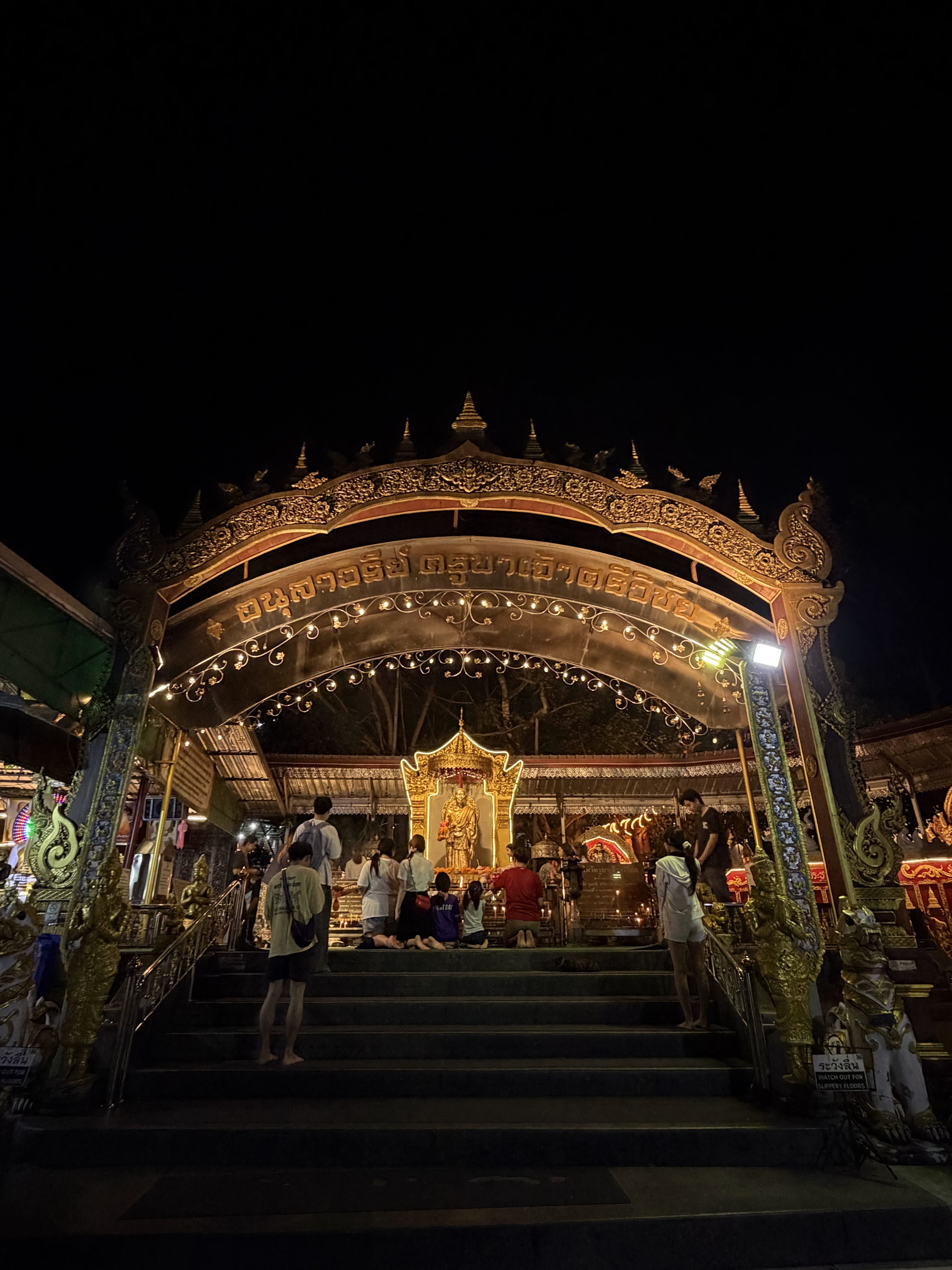
The standing statue at the foot of Doi Suthep marks where the climb begins. It is a place to pause, offer respect, and begin the pilgrimage upward.
Life & Deeds of Kruba Srivichai
How 11,000 volunteers cut the road up Doi Suthep by hand in 5 months and 22 days — the full timeline, the recorded facts and the legends.
Cultural Depth · Transnational Faith Network
The Path of Kruba Sriwichai: Dharma, Culture & Development
The master's lifelong contributions to society, culture and faith form the core of the “Path of Kruba Sriwichai”, whose influence crossed borders to reach across the entire Greater Mekong Subregion.
The Path of Kruba Sriwichai — Three Dimensions
From the remote hills of Lanna to the whole Greater Mekong Subregion, the master's spirit is carried on through three threads: faith and the inner life, guardianship of cultural heritage, and grassroots infrastructure.
Source of faith and the inner life
- Strict observance: rooted in rigorous Buddhist precepts, he upheld vegetarianism and ascetic practice, teaching plain yet profound Dharma wisdom.
- Spiritual guidance: helping people find inner peace, compassion and moral cultivation in daily life.
Guardian of Lanna heritage
- Art for the Dharma: guided by the ideal of “art for the Dharma,” he led the restoration of over a hundred northern Thai religious sites and Lanna-style temples.
- Cultural continuity: protecting and reviving Lanna architecture, crafts and faith traditions for generations to come.
Livelihoods and infrastructure
- Mobilising society: using faith as a bond, he called on tens of thousands of devotees to join public works voluntarily.
- Improving lives: he initiated and led the building of roads (such as the famous Doi Suthep mountain road), bridges and public facilities, greatly improving local transport and community living standards.
The Greater Mekong Subregion Transnational Temple Network
Research by international scholars (e.g. Paul Cohen, Katherine A. Bowie, Charles Keyes) shows that after the master's passing, his disciples and spiritual friends extended his teachings and network across the entire Greater Mekong Subregion (GMS), forging broad cross-border faith and cultural ties.
| Country / Region | Affiliated & Lineage Temples |
|---|---|
| China (Xishuangbanna, etc.) | Wat Pa Chet Maha Ratchathan, Wat Maha Ratchathan Sutthawas, Wat Ratchathan Luang Chang Khob Chom Chai, Wat Phra That Luang Chin Ngoen, Wat Phra Kaew, and others. |
| Myanmar | Wat Phra That Chom Chaeng, Wat Ban Yuen, Wat Yang Mon, Wat Kad Fa, Wat Ratchathan Hua Khuang, Wat Phra That Luang Chom Kham, Wat Sri Bun Rueang. |
| Laos | Wat Pa Phao, Wat Sanguankhalam, Wat Phu Khwai. |
| Thailand (Northern core) | Wat Phra That Hariphunchai, Wat Ban Bang, Wat Ban Hong Luang, Wat Phra That Doi Suthep. |
UNESCO Nomination Highlights
Thailand's Ministry of Culture, Tourism Authority of Thailand and Lamphun Province are jointly promoting Kruba Sriwichai for inclusion among UNESCO's 2028 anniversary eminent figures. His qualities fully meet UNESCO's selection criteria:
| UNESCO Field | Alignment & Contribution |
|---|---|
| Social and Human Sciences | Embodying noble character and selfless devotion, aligning with UNESCO Global Citizenship Education (GCED) values of compassion, empathy, fairness and social responsibility. |
| Culture Sector | Protecting and strengthening Lanna traditional culture, fostering cultural diversity, intercultural dialogue and a culture of peace. |
| Education | Setting a moral and ethical role model for children and youth to engage actively in society, cultivating global citizenship. |
Pilgrimage & Cultural Tourism Route (Lamphun ➔ Chiang Mai)
Key stops of the “Lanna Sage Kruba Sriwichai Pilgrimage Route” launched by the Lamphun Provincial Cultural Office:
Wat Ban Bang, Lamphun
Place of birth: the source and birthplace of Kruba Sriwichai.
Wat Ban Hong Luang, Lamphun
Place of ordination: where at age 21 he was ordained and received the name “Sriwichai”.
Wat Phra That Hariphunchai, Lamphun
Center of faith: a “living museum” preserving the master's life story and relics.
Kruba Srivichai Monument & Doi Suthep, Chiang Mai
Ultimate holy site: the starting point of the road and the gateway to Wat Phra That Doi Suthep.
Key Dates & Academic Events
- 1–11 June 2025
Dharma Pilgrimage Tour
Tessantri Vithi Kruba SriwichaiA cross-regional Dharma pilgrimage tracing the master's footsteps.
- 27–29 September 2026
11th National & 2nd International Academic Conference
Lamphun Buddhist College / Mahachulalongkornrajavidyalaya University (MCU)Theme: “The 150th Anniversary of Kruba Sriwichai's Birth: A World-Renowned Figure”.
- 2028
150th Birth Anniversary & UNESCO Nomination Year
Thailand is promoting his inclusion among UNESCO anniversary eminent figures as the highest tribute for his 150th birth anniversary.
Etiquette
Worship Etiquette & Local Practice
“People come here not just to look at a statue, but to honour the man who carried a road up the mountain.”
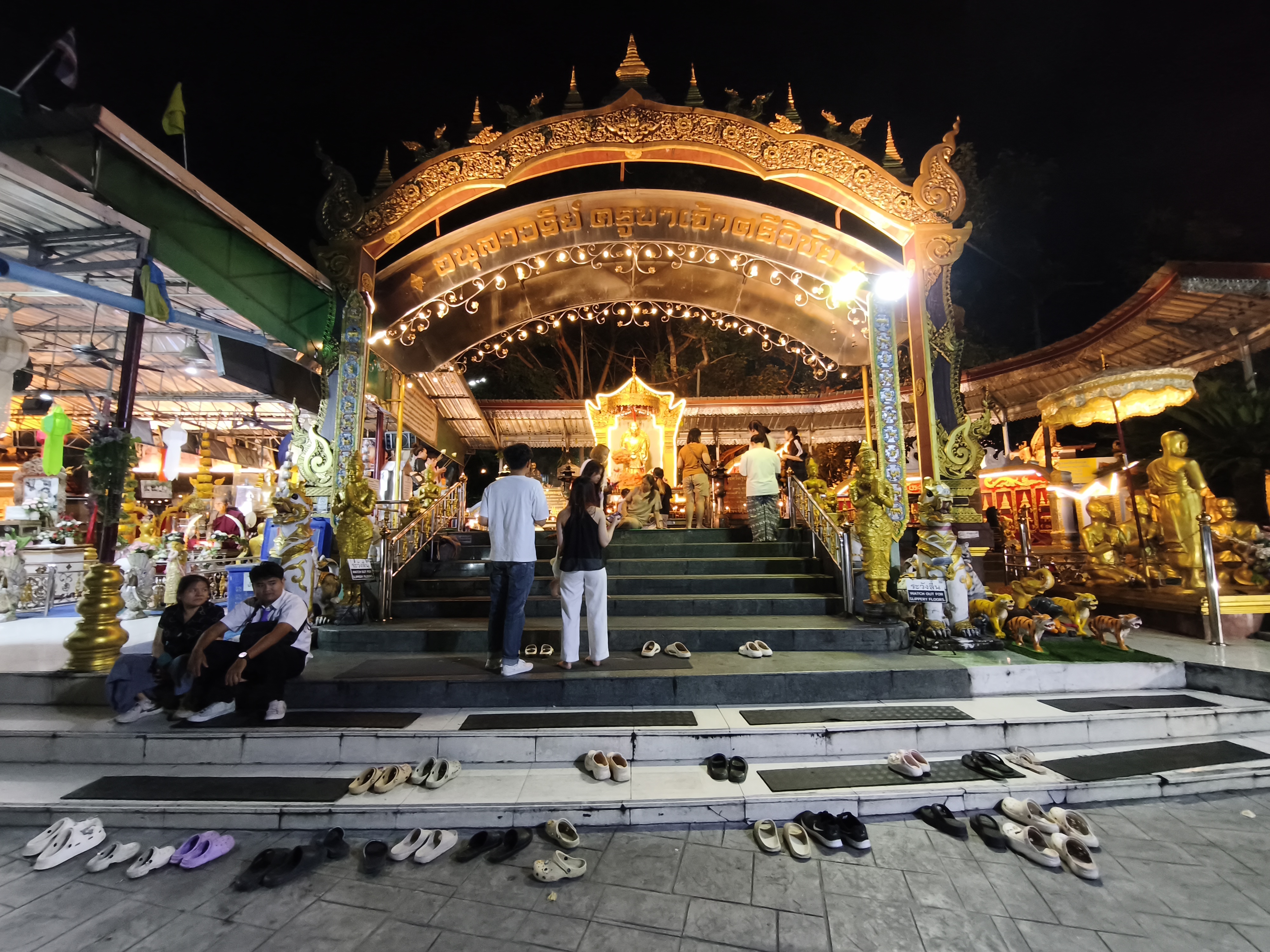
Khruba Siwichai is venerated across Northern Thailand as the “road-building monk”. The monument is both a historical landmark and a place where locals still pray and fulfil vows. Visitors who do not wish to take part may simply observe quietly without disturbing anyone.
The usual order of a visit
Tidy your clothing so shoulders and knees are covered; if water is provided, a brief hand rinse signals arriving clean.
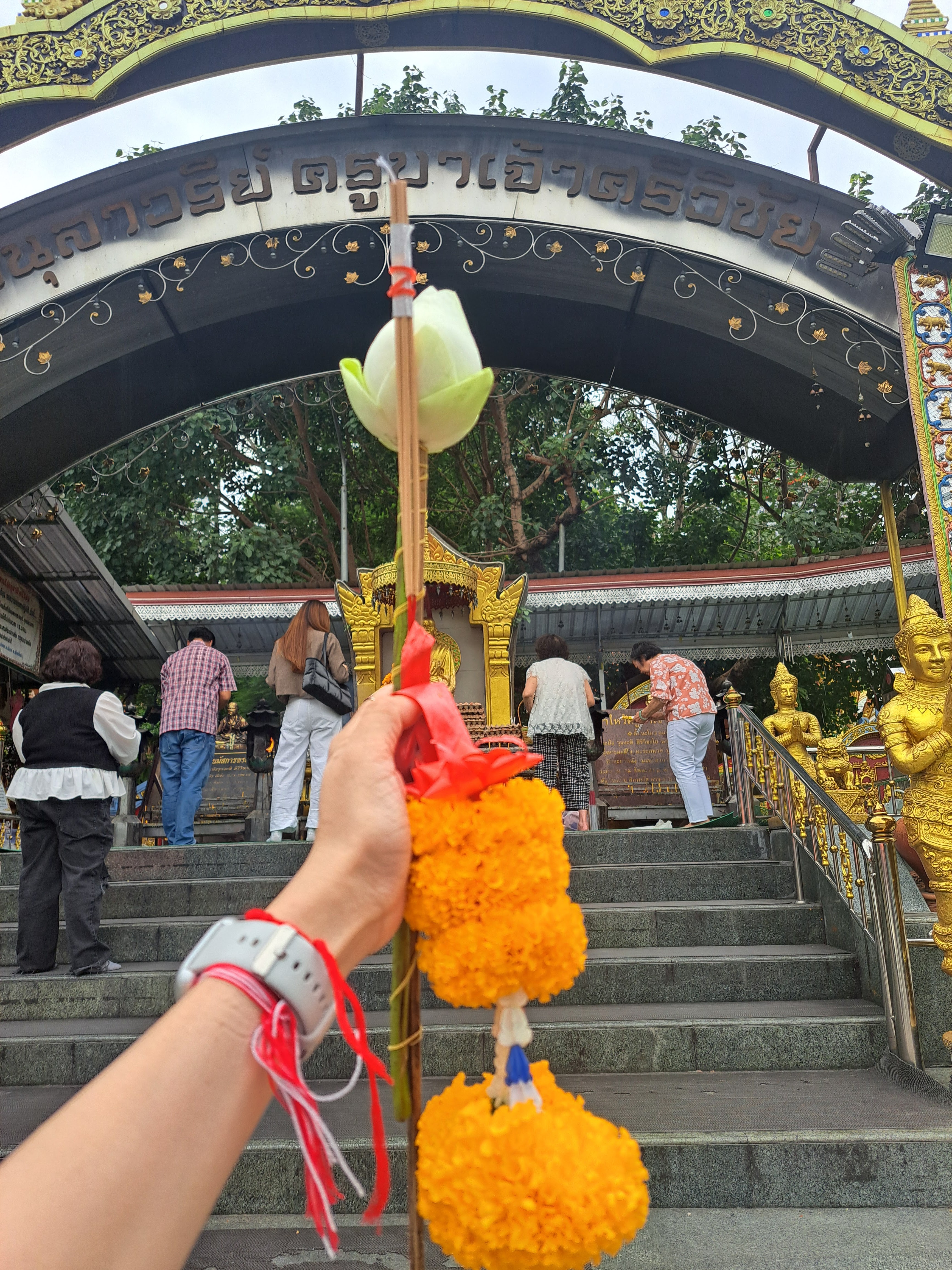
Three incense sticks, one candle and a marigold garland are the common offering; follow the on-site guidance rather than a fixed rule.
Raise joined palms to the forehead and state your name and wish. Local custom holds that a fulfilled wish should be acknowledged by returning.
Three clockwise circuits of the base are the usual Northern Thai expression of respect; watch the steps and passing traffic.
Clean water, flowers, fruit and incense are typical. Any donation box is entirely voluntary, with no expected amount.
Close with one more gesture of respect. Locals believe a granted wish is repaid by returning with flowers, a donation or help with building work.
Common offerings and what they mean
The most common Northern Thai offering; its gold colour evokes light and perseverance, echoing monastic robes.
Incense stands for purified conduct, the candle for wisdom dispelling ignorance — commonly three sticks and one candle.
The simplest and most universally accepted offering, standing for purity and equality; a glass of water alone is enough.
Seasonal fruit or traditional sweets, usually taken home and shared afterwards to spread the merit.
On wishes and vow-keeping
In Northern Thai belief, returning to fulfil a vow is understood as gratitude made concrete: coming back with flowers, a donation or help with road and temple work. This page describes a folk custom for cultural context only and makes no claim about supernatural effects; take part only if it fits your own beliefs.
Practical etiquette
- This is a religious site: do not climb the base, lean on the statue or point your feet towards it.
- Ask before photographing people, especially those mid-prayer; avoid flash and low-flying drones.
- Dress with shoulders and knees covered; remove hats and shoes where signage asks for it.
- Judge any request for donations yourself — this site does not endorse any individual or organisation.
- Light incense only in the designated place and make sure it is fully out before leaving; the mountain is windy.
- Move clockwise and keep to the flow — the simplest way to respect local custom.
Visit Guide
Plan Your Visit
Free, open around the clock, and easy to reach — here is everything you need for a smooth visit to the monument and the lower slopes of Doi Suthep.
Open 24 hours
- Every day00:00–23:59
Free entry
- Monument groundsOpen to everyone, no ticket
- Roadside parkingSmall local fee
- Doi Suthep templeSeparate ticket on the mountain
How to reach the monument
- From Chiang Mai International AirportThe airport is ~8 km away. ① Take a taxi or Grab from the arrivals hall — about 15–20 min, roughly ฿150–250; ② Follow the Super Highway then head west on Huay Kaew Rd to the monument; ③ On a budget, take the airport bus to the Old City and transfer to a red songthaew.
- Red songthaewFrom Chiang Mai University / Nimman, ~15 min
- Tuk-tuk or taxiFrom the old city, ~20 min
- Car / motorbikeDirect via Huay Kaew Road
Photography tips
The white statue and the green mountain make a photogenic pair in almost any light.
Best times
Soft light on the face of the statue
Warm backlight and golden glow
Where to shoot
View Full statue with mountains behind
Low angle to include the hill
View Framed by trees and stones
Good for candid devotees
Camera settings
Camera 50–85mm
Phone Portrait mode
Camera 16–35mm
Phone 0.5x wide
Quick tips
- Go early to avoid crowds
- Bring a polarizer for the sky
- Respect worshippers when framing
When to come
Chiang Mai has three clear seasons; the cool and dry months are most comfortable.
Best weather
Pleasant temperatures, clear skies, busiest season.
Hot & hazy
High heat; haze can mute distant views.
Green season
Afternoon showers, lush hills, fewer crowds.
Stay safe
- Traffic on Huay Kaew Rd — Busy road — use the crosswalk
- Monkeys on the trail — Do not feed or provoke them
- Belongings — Keep valuables close in crowds
Haze season (Mar–Apr)
During burning season, air quality can drop. Check the AQI and consider a mask for long outdoor stays.
Useful numbers
Keep these handy during your trip:
Getting around
The site is friendly to most visitors:
- Paved level paths — Wheelchair accessible to the statue
- Step-free viewing — Open plaza in front of the monument
- Restrooms — Public restrooms nearby
Frequently asked questions
Is there an entrance fee? +
No. The monument grounds are open to everyone free of charge, 24 hours a day.
How do I continue to Doi Suthep? +
From the monument you can take a red songthaew up the mountain, or walk part of the trail. The temple is a short drive above.
What should I wear? +
As a religious site, please dress modestly — cover shoulders and knees, and remove hats near the statue.
When is the best time to visit? +
Early morning for cool air and soft light, or late afternoon for the sunset glow on the statue.
Where is Kruba Srivichai Monument located? +
Kruba Srivichai Monument is located at 99 Huay Kaew Rd, Tambon Su Thep, Mueang Chiang Mai District, Chiang Mai 50300, Thailand, at the foot of Doi Suthep (Plus Code RW7W+4F).
How do I get there from Chiang Mai Old City? +
Take a red songthaew or a Grab ride west along Huay Kaew Road — about 10–15 minutes. The monument sits just before the road begins climbing Doi Suthep.
What landmarks are near the monument? +
The closest landmarks are Wat Phra That Doi Suthep and Huay Kaew Waterfall, with Chiang Mai University and the Nimman area a short ride away.
Is the monument suitable for wheelchairs and seniors? +
The monument grounds are flat at street level, so the base is reachable without steps. Some surrounding paths are uneven, so take care after rain.
Is it “Kruba Srivichai” or “Khruba Siwichai”? +
Both spellings refer to the same Northern Thai monk and the same monument. Thai sources write ครูบาศรีวิชัย; English sources use Kruba Srivichai, Kruba Sriwichai or Khruba Siwichai. Google Maps lists it as “Kruba Srivichai Monument”.
How long should I spend here? +
Most visitors spend 20–40 minutes: pay respects, walk around the base and take photographs. Allow extra time if you are continuing up to Doi Suthep or on to Huay Kaew Waterfall.
Landmarks & Attractions Around Khruba Siwichai Monument
When visiting Khruba Siwichai Monument, visitors can easily explore surrounding historical landmarks and points of interest, including Wat Phra That Doi Suthep and Huay Kaew Waterfall.
Nearby Eats
Taste Northern Thai Food
The monument sits between Chiang Mai University, Nimman and the old city — a great base to try the flavors of Lanna.
Northern curry noodle soup with crispy noodles.
Herbal Northern Thai sausage, grilled.
Roasted green-chili dip with vegetables.
A shareable Northern feast on a low tray.
Sweet, creamy refreshment for the heat.
“After paying respects, nothing beats a bowl of khao soi in Nimman just down the road.”
Weather
Current Conditions in Chiang Mai & 7-Day Outlook
The monument sits at the foot of Doi Suthep, where altitude and the mountain slope make it feel slightly different from the city centre: cool in the early morning, hot at midday, with brief afternoon showers in the rainy season. A quick look at live conditions and the week ahead makes planning far easier.
Current conditions
Light drizzle
32° / 24°
Observation time
2026-09-14 17:45
- Feels like
- 34°C
- Chance of rain today
- 78%
- Wind
- 5 km/h
- Strongest wind today
- 13 km/h
- ☀️ UV index
- 9
- Humidity
- 92%
- 🌅 Sunrise
- 06:11
- 🌇 Sunset
- 18:27
7-day outlook
Today
14
🌦️
Drizzle
32° / 24°
💧 78%
Tue
15
⛈️
Thunderstorm
30° / 23°
💧 88%
Wed
16
⛈️
Storm
29° / 23°
💧 99%
Thu
17
⛈️
Thunderstorm
28° / 23°
💧 95%
Fri
18
⛈️
Thunderstorm
28° / 23°
💧 95%
Sat
19
🌦️
Showers
29° / 22°
💧 92%
Sun
20
🌦️
Showers
30° / 22°
💧 70%
Advice for today
⚠️ Safety alerts
- Weather warning: . Consider changing your plans and avoiding mountain roads and valleys; keep an eye on the latest updates.
- Thunderstorms are forecast. Do not stay on open ground, on a summit or under a lone tree — move into a building or a vehicle at the first thunder.
- Rain will be heavy. Valleys, streams and low ground on the mountain can flood quickly, and stone steps turn slick — avoid them.
- Strong winds expected. Keep away from billboards, temporary structures and loose rock on the hillside, and watch for falling branches.
- Visibility is poor. The mountain road and the viewpoints will be limited, so drive slowly and watch for oncoming traffic.
⚠️ No weather warning is in force at the moment.
👕 What to wear
It will be hot, so wear light, breathable clothing that lets you cool down.
🧭 How to plan the visit
Light rain is expected and the stone steps get slippery — watch your footing, and expect open-air stops to be less pleasant.
🎒 What to bring
Conditions look steady — no special preparation needed, just head out as usual.
Sunset today is around 18:27; the hour before it gives the best side light on the statue.
Values shown are a reference snapshot — once you arrive, trust what you feel and the latest local forecast.
Seasons
Seasonal Strategy: Climate, Visibility & Crowds
Chiang Mai's seasons differ mainly in temperature, rainfall and air quality. The table below compares four standard periods so the question “when should I go” becomes a practical decision.
Period
Cool season · Nov–Feb
Climate & visibility
15–30°C, little rain, clear air; light mist over the mountain on some mornings
Crowds & experience
Busiest time of year, especially early mornings and weekends
Strategy
The first choice. 07:00–09:00 gives soft light and fewer people; bring a light jacket for the temperature swing
Period
Hot season & burning period · Mar–May
Climate & visibility
22–38°C; agricultural burning in March–April can raise PM2.5 and cut visibility
Crowds & experience
Moderate crowds; almost nobody at midday
Strategy
Check air quality before travelling if you are sensitive; keep activity to sunrise and sunset, stay indoors at midday
Period
Rainy season · Jun–Aug
Climate & visibility
23–32°C with short afternoon showers; the mountain and waterfalls look their best after rain
Crowds & experience
Fewer visitors and fresh post-rain air
Strategy
Carry rain gear and climb in the morning; stone steps are slippery after rain, and insects are more active
Period
Late rains turning cool · Sep–Oct
Climate & visibility
22–31°C as the rains ease, with occasional multi-day downpours and standing water
Crowds & experience
Visitor numbers rise again and festivals pick up
Strategy
A good balance of greenery and comfort; check the weekly forecast and avoid runs of rainy days
Temperature and rainfall ranges summarise Chiang Mai's long-term climate normals and can be checked against the averages published by the Thai Meteorological Department; individual years vary somewhat.
Routes by traveller
Itineraries Tailored to Different Visitors
The same monument suits very different plans. The three routes below correspond to families with children, photographers and nature watchers, and visitors needing a low-effort, step-free option — pick by who you are travelling with and how fast you want to move.
Family with children
About 2–3 hours
Families who want an easy pace with room for rest and a little learning
- 1. Start at the base platform with the story of the road-building monk, so children look at the statue with a question in mind
- 2. Follow the flat path towards Huay Kaew Waterfall to see the stream and shade — no climbing involved
- 3. Return to the main road for a Northern Thai noodle or snack meal, away from the midday heat
- 4. If time and energy allow, ride up to the temple for the city panorama
Photography and nature
Half to full day
Travellers who care about light quality and will wait for the right position
- 1. Arrive just after sunrise and use low side light on the statue and the mountain ridgeline
- 2. Walk the mountain road in the morning, recording vegetation, birds and light under the canopy
- 3. Rest in the shade or at a café at midday, waiting out any afternoon shower (in the rainy season)
- 4. Return to the opposite side of the base an hour before sunset for golden light, then stay for blue hour
Low-effort and step-free
About 1–1.5 hours
Visitors who need level surfaces, short distances and nearby places to sit
- 1. Park beside the base platform, which is essentially level with the street and free of steps
- 2. Follow the flat loop for a full frontal view of the statue and inscriptions on hard standing
- 3. Rest on a shaded bench or in a pavilion and watch locals offering flowers and prayers
- 4. Use the public facilities along the main road for toilets and water before leaving
Routes
Recommended Routes (Half-Day / Full-Day)
Both routes below build outwards from the monument, linking the foot of the mountain to the temple above. Times and distances are estimates — adjust them to your fitness, the weather and the crowds.
Half-day essentials
About 4 hoursCentred on the monument with a short stretch of the lower trail — ideal for a tight schedule or a first visit.
- 08:30 Arrive at the base platform, walk clockwise and read the inscriptions to learn why it was built
- 09:30 Walk along Huay Kaew Road to the waterfall entrance for the stream and shade
- 11:00 Return to the main road for lunch or coffee, avoiding the midday heat
- 12:30 Add a short climb or end the visit, depending on energy levels
Full-day in depth
About 8–9 hoursCombines the monument, the lower trail and the temple above into one day of history, nature and city views.
- 08:00 Base of the monument: the best light and the fewest people
- 09:30 Lower trail and waterfall: vegetation, birds and the stream
- 11:30 Lunch and a water refill back on the main road
- 13:00 Ride or walk up to the temple and its viewing platform
- 15:30 Return downhill for coffee and bookshops around the university or Nimman
- 17:30 Back on the opposite side of the monument to finish in golden light
Facilities
Visitor Services & Nearby Amenities (neutral, by type)
The list below describes the types of facilities you can generally expect at and around the monument. No individual business is recommended; check on-site notices for current opening hours, fees and availability.
Public toilets
Public toilets are usually available along this stretch of road and near the temple and the foot of the mountain; some are fee-based or maintained by donation.
Carry tissues and small change
Parking
Parking along Huay Kaew Road and at the foot of the mountain is mostly roadside or open-lot, and fills up in high season and early mornings.
Arrive early or take a songthaew in peak season
Food and snacks
The area offers Northern Thai noodles, snack stalls, coffee and simple meals across a wide price range, mostly along the main road and near the university.
Plan lunch around the hottest hours
Accommodation
Options range from hostels and guesthouses to mid-range and upper-tier hotels, concentrated in the Old City, the Nimman area and the foot of the mountain.
Choose a district by budget and transport needs
Shops and convenience stores
Convenience stores and small supermarkets along the main road stock water, rain gear, sunscreen and basic medicines.
Refill water before heading uphill
Fuel and charging
Petrol stations and EV charging points are spread across the city and main roads; facilities on the mountain road itself are sparse.
Check fuel or charge before the climb
Medical care and pharmacies
Pharmacies, clinics and general hospitals in the city and around the university can handle heat exhaustion, scrapes and similar issues.
Bring insect repellent and stomach remedy
Banking and cash
Bank branches and ATMs line the main road and commercial districts; most small stalls take cash only.
Keep some small notes handy
Water and rest spots
Pavilions, shaded benches and the open ground in front of the temple are the usual places to rest; some offer free or donation-based water.
A reusable bottle cuts plastic waste
Accessibility
The platform around the base is essentially level with the street with no steps; some surrounding paths and hillside sections remain uneven.
Surfaces get slippery after rain
This is a non-profit educational site. No specific shop, brand or venue is recommended — the overview below describes facility types and locations only.
Gallery
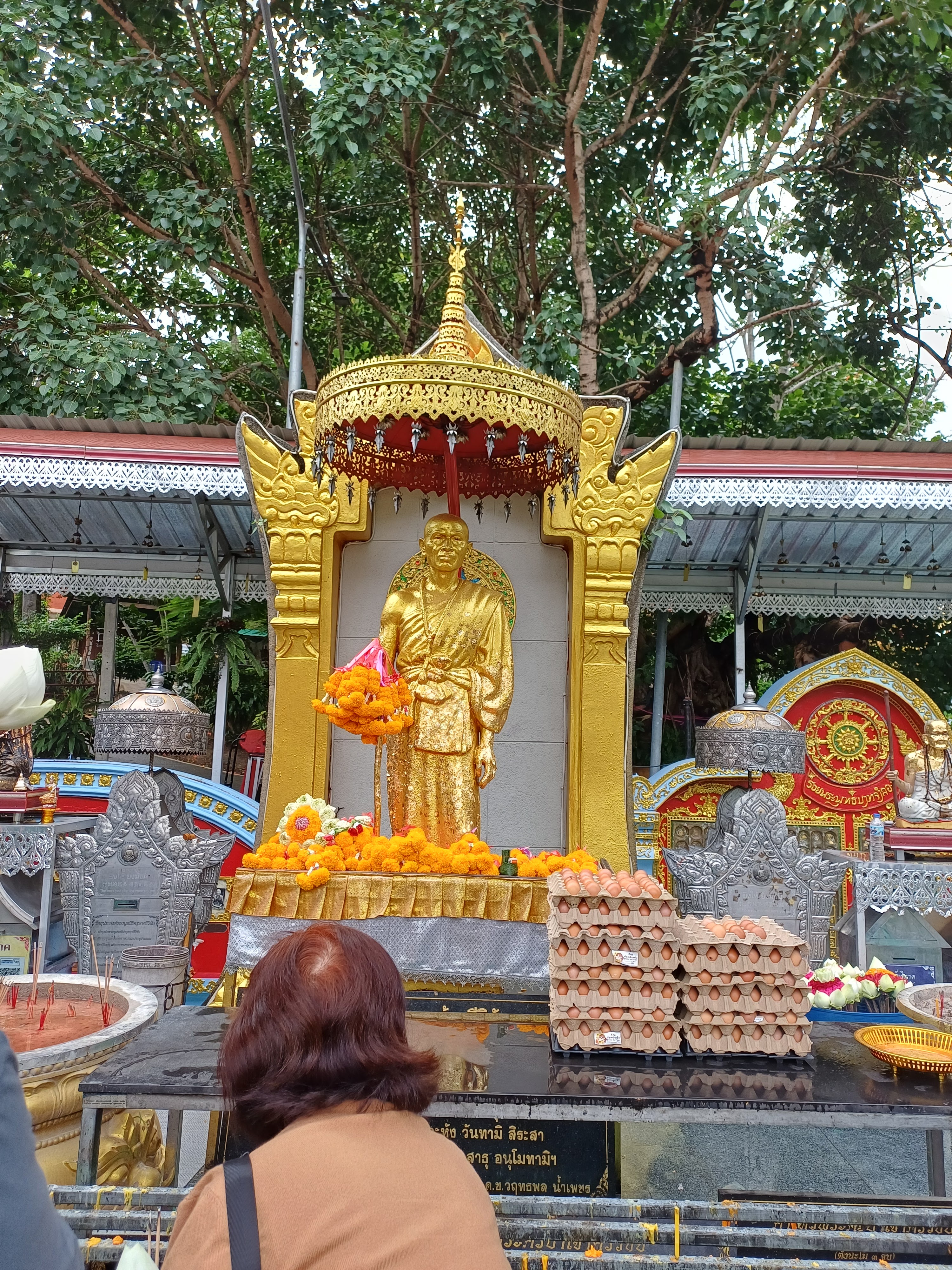
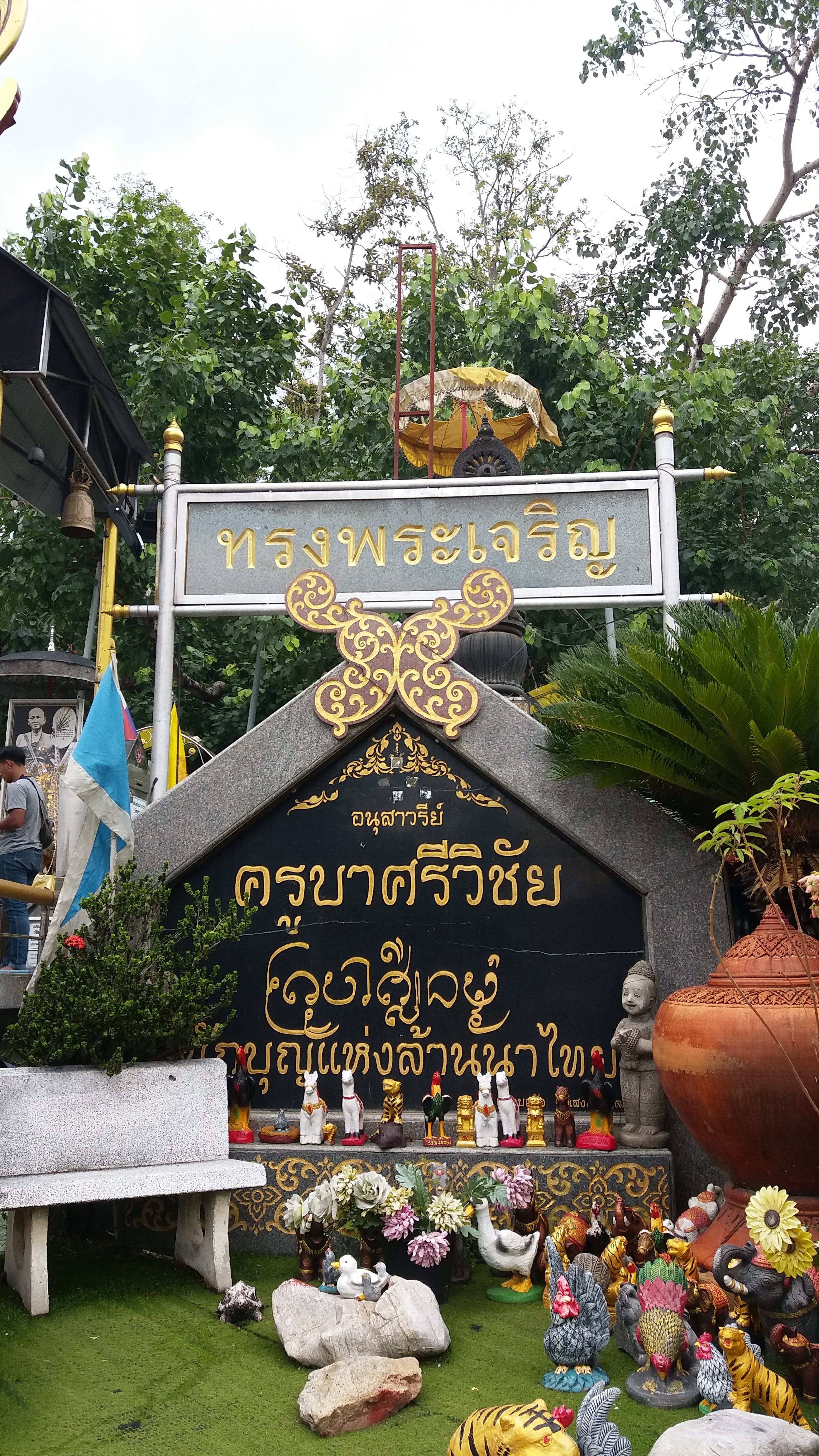
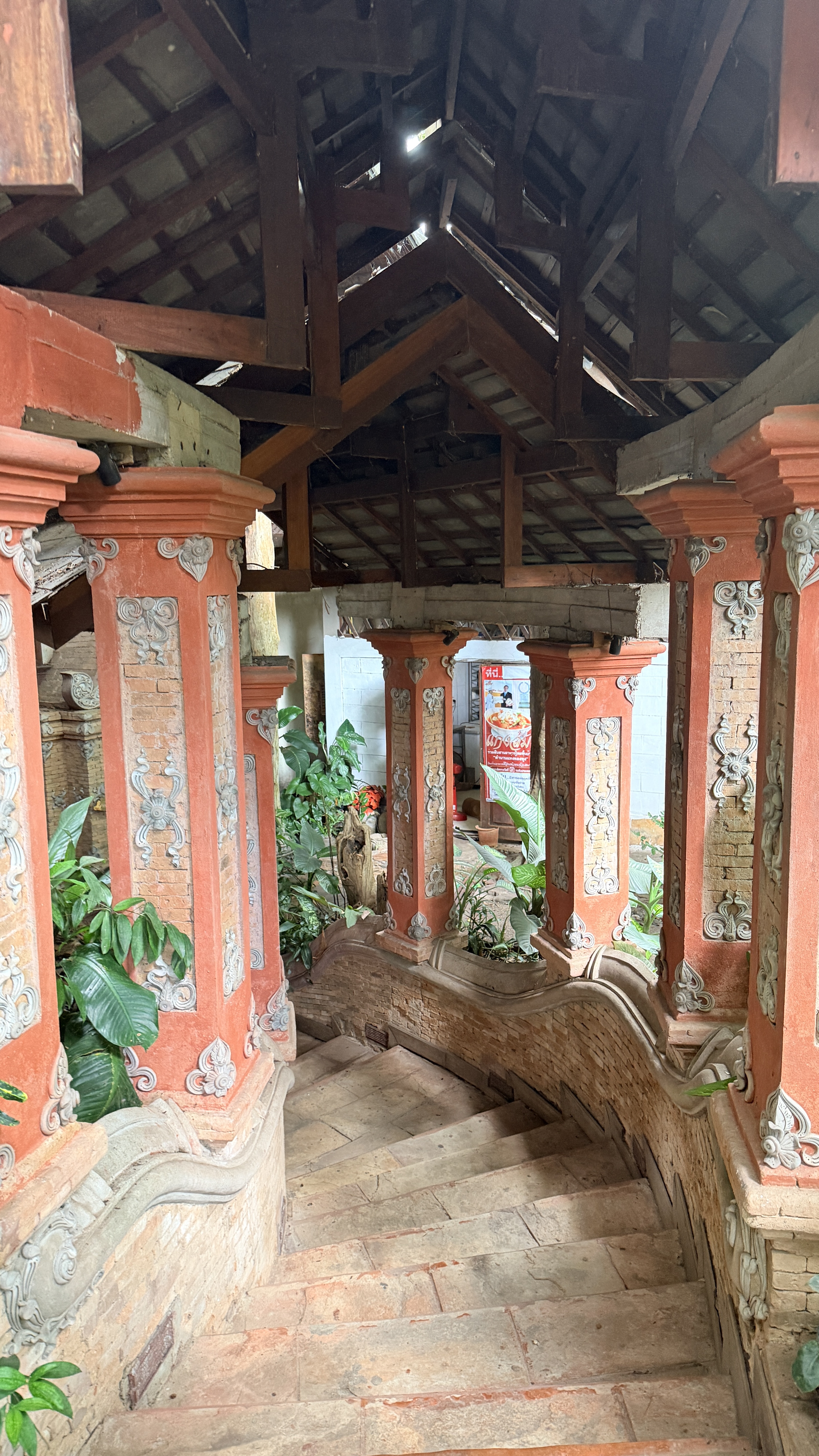
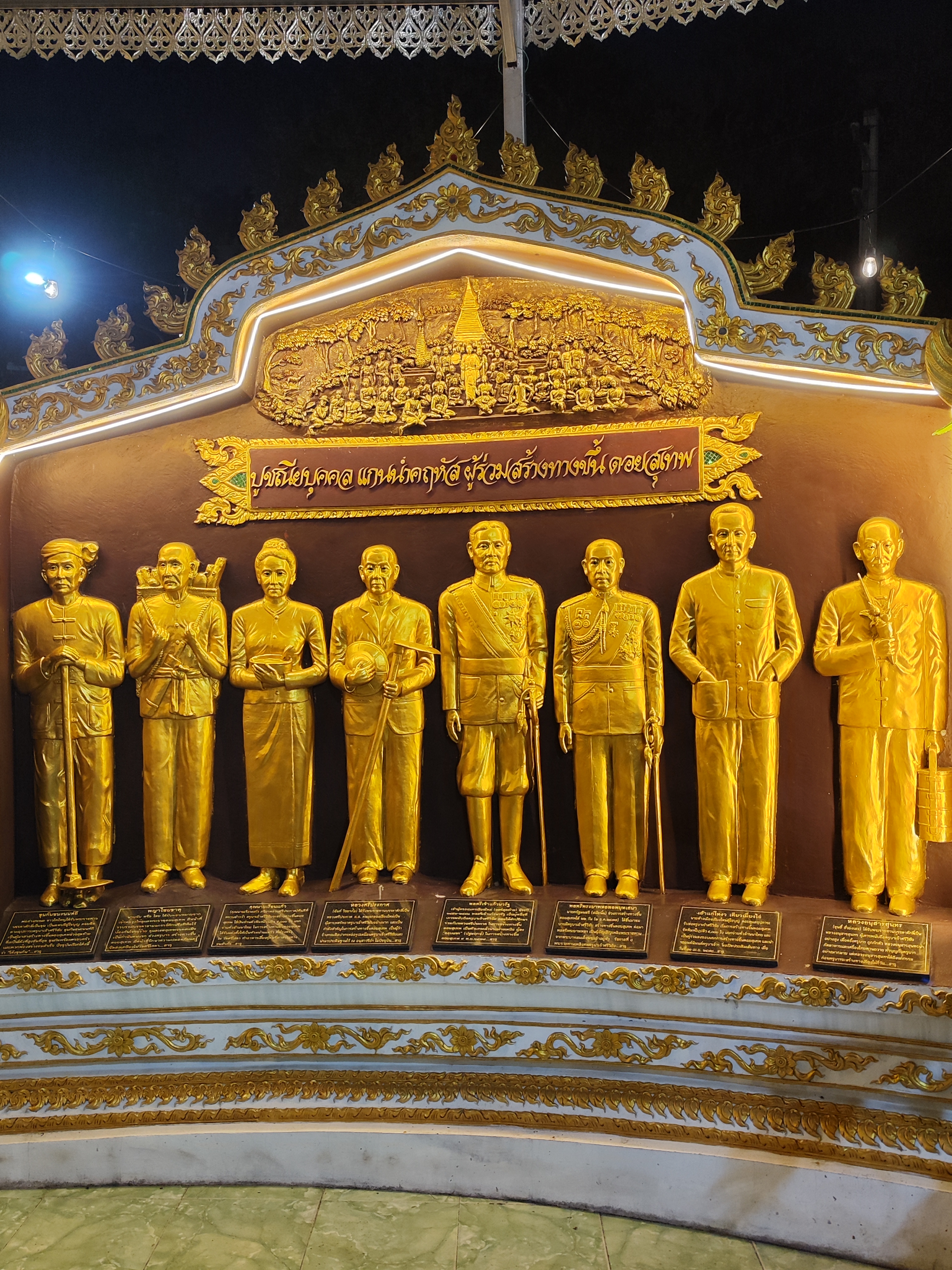
Monument Gallery
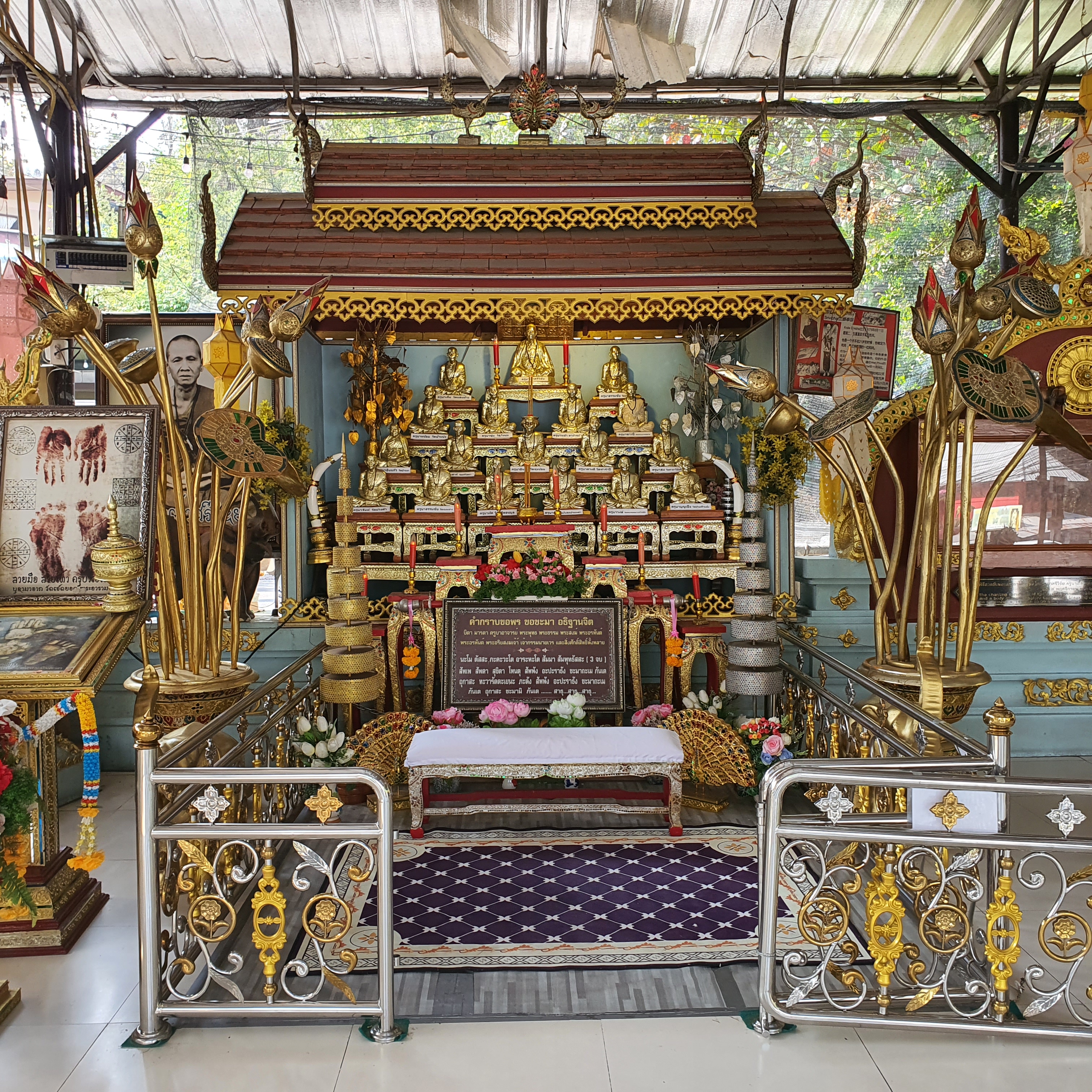
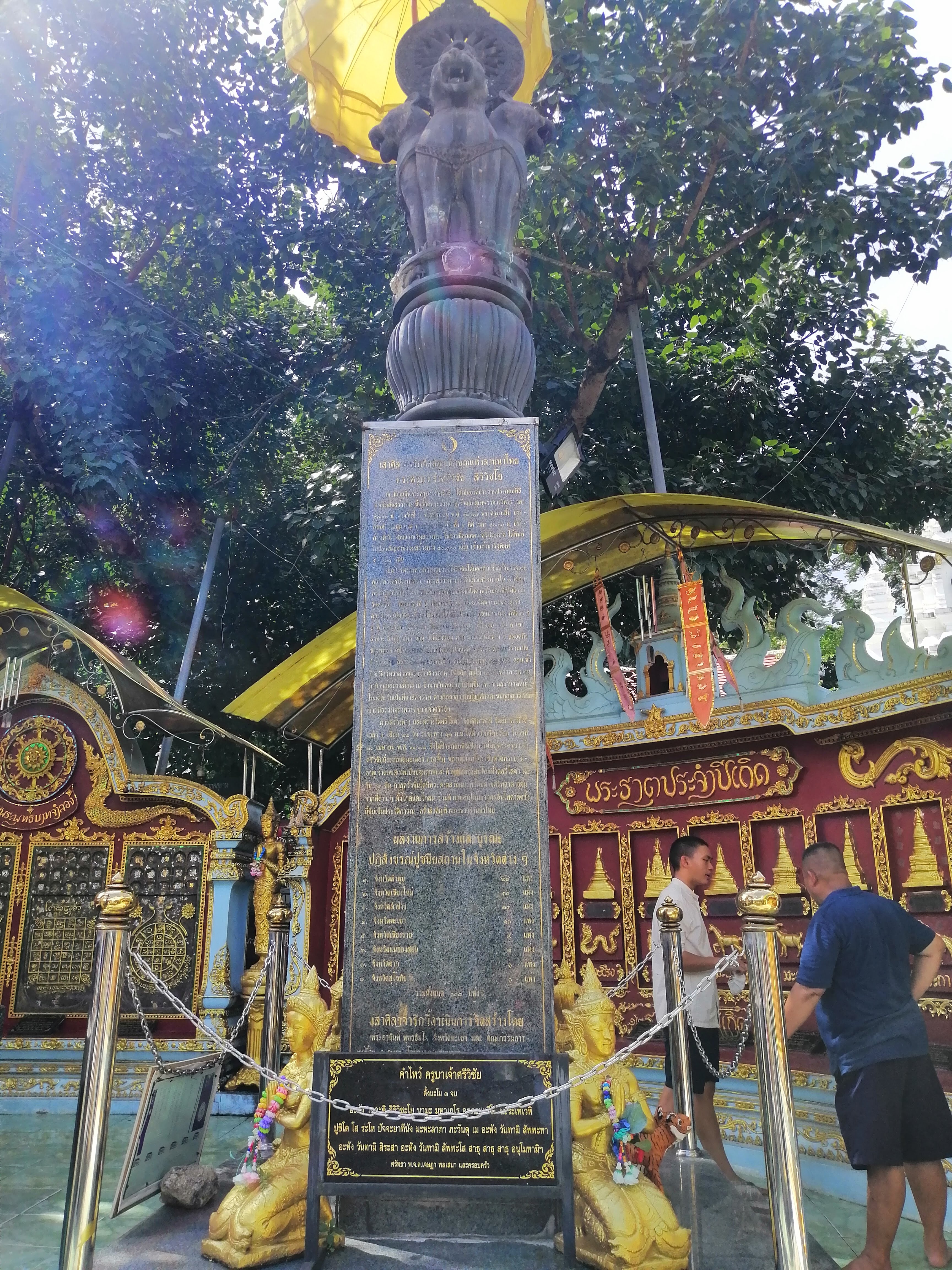
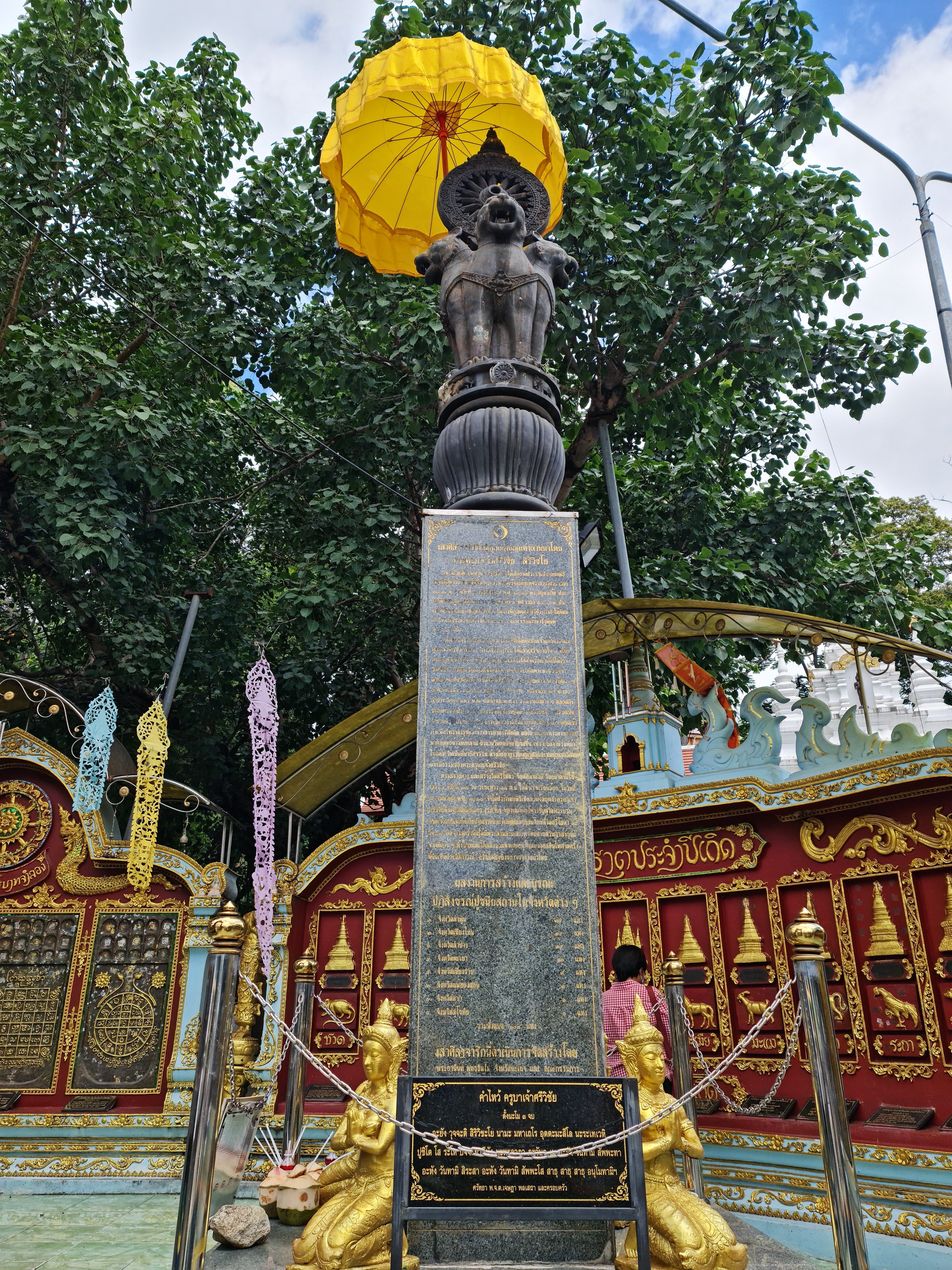
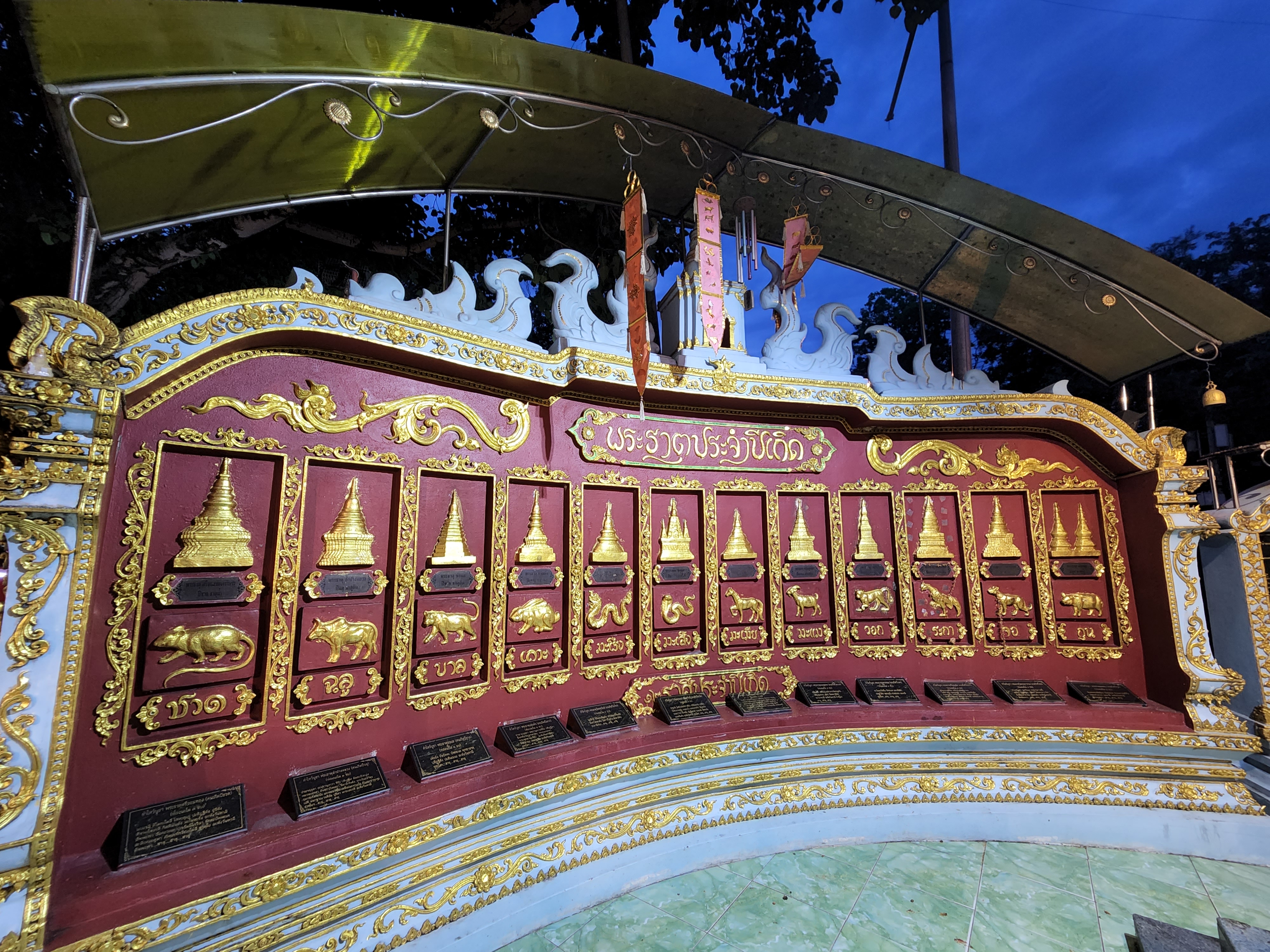
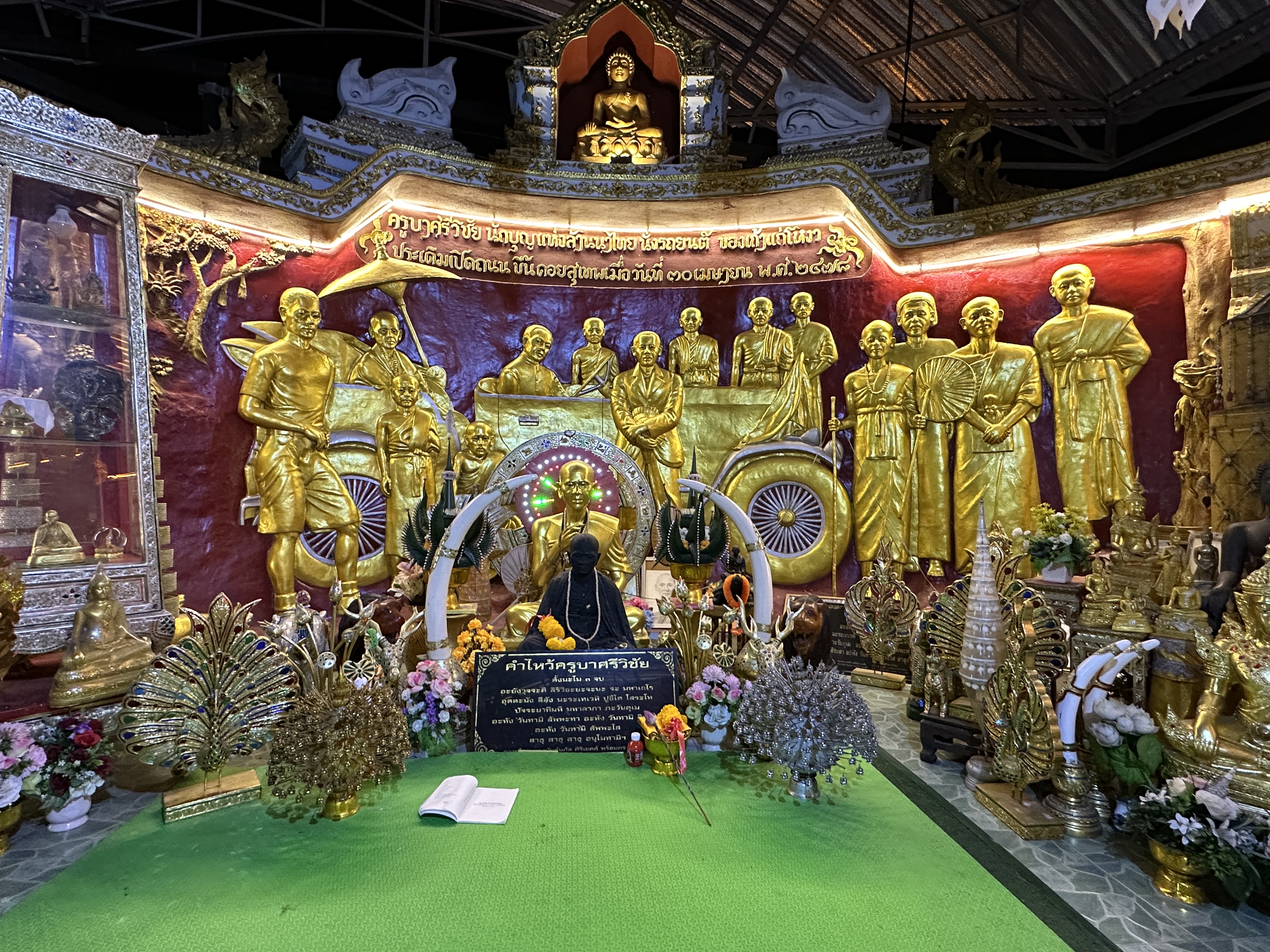
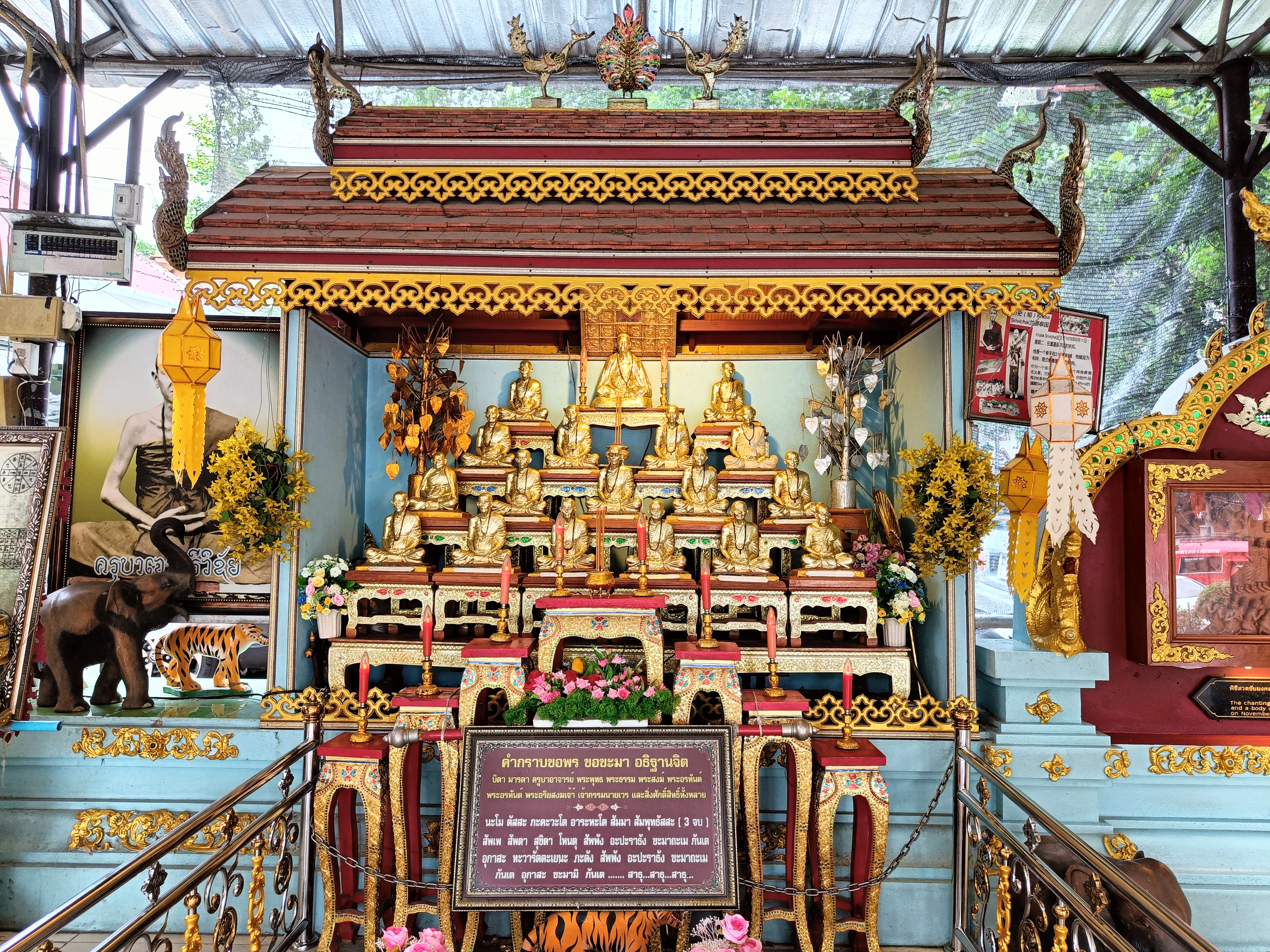
A look at the statue, the surrounding grounds, and the mountain it watches over.
Photos via public Google Maps contributors.
Reviews
What Visitors Say
Travelers from Thailand and around the world stop here on their way to Doi Suthep. Here is a sample of what they share.
Rating & review count synced from Google Maps user reviews · September 2026 · See all reviews on Google Maps ↗
These reviews are displayed on this page only and are not published in this site's structured data (JSON-LD).
Reviews from Google Maps users · See all reviews on Google Maps ↗
Quiet and reverent, not touristy at all. Loved the mountain backdrop.
Finally understood why locals respect Kruba Srivichai so much. Great starting point for Doi Suthep.
Came at 7am, perfect light on the statue. Easy to combine with the temple above.
Our kids enjoyed the open space and the story. Free and accessible.
Combine with Huay Kaew waterfall a short walk away. Bring water in the heat.
We stop here every year on his anniversary — very meaningful for Northern Thais.
Right by the road, hard to miss if you're heading to Doi Suthep.
A calm breath before the busy temple. Worth five minutes of your time.
Science & care
What to Know, and How to Behave
This is a memorial that is still in daily use, so it asks to be understood as well as respected. Three points worth knowing come first, followed by the boundaries to observe while you are here.
Three things worth knowing first
01
Why he is remembered
Khruba Siwichai (1878–1938) was a Lanna monk renowned for directing the construction of the road up Doi Suthep to Wat Phra That Doi Suthep. Built with hand tools and mass labour before heavy machinery existed, the road remains physical evidence of collective work.
02
It is neither a tomb nor a temple
This is a commemorative structure used for remembrance and devotion, not a burial site. Inscriptions and dates around the base record when it was erected and who funded it — the primary evidence for dating and interpreting it.
03
Why road-building is symbolic
In Northern Thai religious thought, building a road is at once physical public works and a metaphor for opening a path to goodness for others. That is why the monument is still actively used by the sangha, local communities and pilgrims.
Recommended
- Walk clockwise, in keeping with local custom
- Keep your voice down and leave prayer space to those who are worshipping
- Take litter with you or use the sorted bins; clearing it on a mountain is costly
- Carry a reusable bottle instead of buying single-use plastic
- Ask before photographing people, especially monks and those at prayer
- Park only in designated areas so emergency access stays clear
Please avoid
- Climbing the base, the statue or the railings — stone surfaces wear quickly
- Touching or moving offerings, incense or garlands
- Flying drones low or setting up tripods for long periods in the core area
- Releasing animals or sky lanterns, which can start wildfires
- Walking against traffic on the mountain road during the burning season; it is narrow with limited sightlines
- Treating any commercial promise of “guaranteed results” as official information
The stone and metalwork of the monument weather naturally over time. The most effective protection a visitor can offer is simply to touch nothing, carve nothing and leave no trace — so the next person sees exactly the same thing.
Sources
References & Credits
This non-profit guide compiles publicly available information to help visitors learn about the monument.
Photo credits
- Photos are sourced from public Google Maps contributors; copyright belongs to the original authors.
- Historical context adapted from open encyclopedic sources. — Wikipedia
Fact-checking
Key facts (coordinates, rating, hours) are drawn from the official Google Maps listing and public references. If something looks off, tell us.
Reviews
Synced September 2026
Synced from Google Maps user reviews, synced September 2026; copyright belongs to the original authors and Google Maps
View all reviews on Google Maps ↗Found an error?
We are a small volunteer team. If you spot a mistake in the history or visiting info, please let us know.
Suggest a correctionAll photos displayed on this website remain the property and copyright of their original photographers.
Content last updated: September 2026
© 2026 Kruba Srivichai Monument project
Location
Location & How to Visit Khruba Siwichai Monument in Chiang Mai
Location & Directions
Find the monument at the foot of Doi Suthep on Huay Kaew Road — the gateway to the mountain.
📍 99 Huay Kaew Rd, Tambon Su Thep, Mueang Chiang Mai District, Chiang Mai 50300, Thailand
🧭 RW7W+4F
🌐 18.8128°N, 98.9435°E
Start of the climb
This is the traditional launch point for songthaews and the walking trail up to Wat Phra That Doi Suthep.
For official updates and regional tourism information, visit Thailand / Chiang Mai Official Tourism Portal ↗